Bringing fragmented care plan management into one place
About HCAH
HCAH is a healthcare company with recovery centres across 7 tier-1 cities in India. It has helped over 25,000 people recover from stroke, trauma and neurological conditions.
Care Plan
- A plan created by the therapy and nursing heads that outlines the patient's prescribed therapy sessions and medical procedures.
- Each session and procedure is added to the bill upon completion.
Overview
Care plan management involved therapy and nursing heads, therapists, and the billing team—from creating and executing plans to adding completed services to patient bills.
The process relied on Excel sheets, notebooks, and manual handoffs, leading to billing inaccuracies and significant time spent managing care plans.
I designed a new end-to-end workflow where therapy and nursing heads can create and manage care plan on IRIS, a web-based patient management tool built for the staff at the recovery centre.
Impact
100% care plan adoptionAll care plans are now created and managed through IRIS
62%reduction in billing inaccuracies after launch
Eliminated daily manual updatesCare plans now update automatically when therapists complete a session/procedure
Problem
At HCAH's recovery centres, care plans lived across Excel sheets and paper notebooks and were passed by hand between therapy heads, therapists and billing, so patient bills drifted from what had actually been done.
Care plan management was fragmented and heavily manual, creating operational inefficiencies across departments
Care plans were tracked across Excel sheets and paper notebooks, with no single source of truth.
Managing and updating individual patient care plans was time consuming for staff.
The workflow depended on multiple manual handoffs between therapy heads, therapists, and the billing team.
Manual processes increased billing errors.
Research
I spoke with 27 staff across the three roles that touch a care plan. The finding that shaped the design: updating a plan cost staff more time than creating one.
Understanding the people involved
I talked to the ground staff of the recovery centre to know their current workflow and challenges.
8 Therapy & Nursing heads
Responsible for creating and tracking care plans
12 Therapists & Nurses
Responsible for executing the care plan
7 Reception Staff
Responsible for adding care plan items to the bill
What the research surfaced
Business Problems
- 1Billing errors from missed treatment updates.
- 2High operational effort to manage care plans manually.
- 3Fragmented treatment data with no single source of truth.
- 4Inconsistent care plan workflows across recovery centres.
User Problems
- 1Updating care plans took more time than creating them.
- 2Treatment updates had to be maintained across separate records.
- 3No single, up-to-date view of a patient's treatment progress.
Solution
One connected flow inside IRIS: therapy heads create the plan, therapists mark work done on the app, and billing only steps in to correct exceptions.
A new, connected flow
Together with the PM, we redesigned the care plan workflow to reduce manual coordination and address the needs of all stakeholders.
1
Therapy and nursing heads manages the care plan in IRIS
Creation and changes only
- A single source of truth
- No daily manual updates
2
Therapists and nurses mark the care plan on the IRIS app
Completed activities automatically update the care plan and billing
- Eliminates manual reporting
- Reduces billing inaccuracies
3
Reception staff no longer enters care plan items manually
Only reviews and corrects exceptions when required
- Reduces manual effort for the billing team
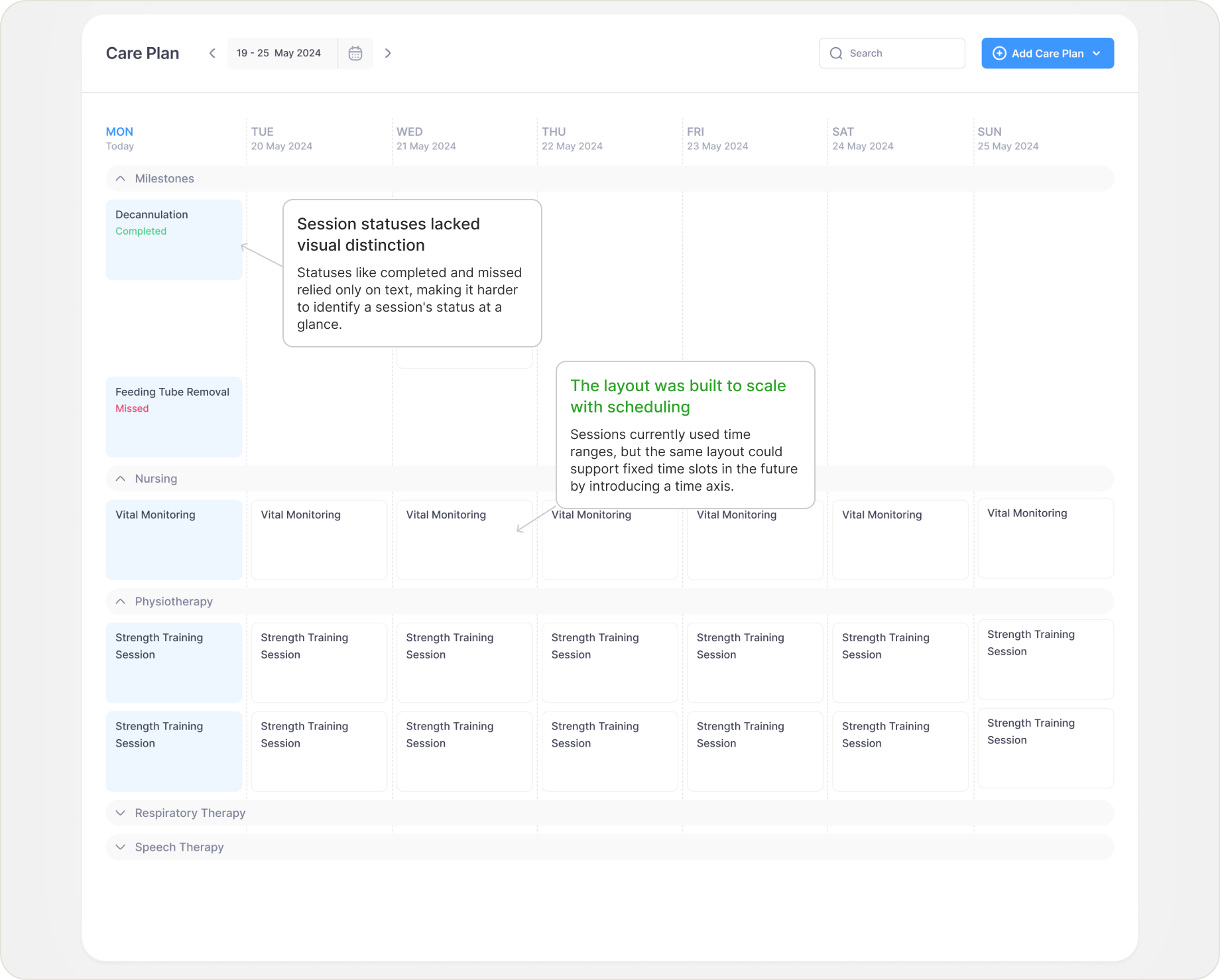
Care Plan V1
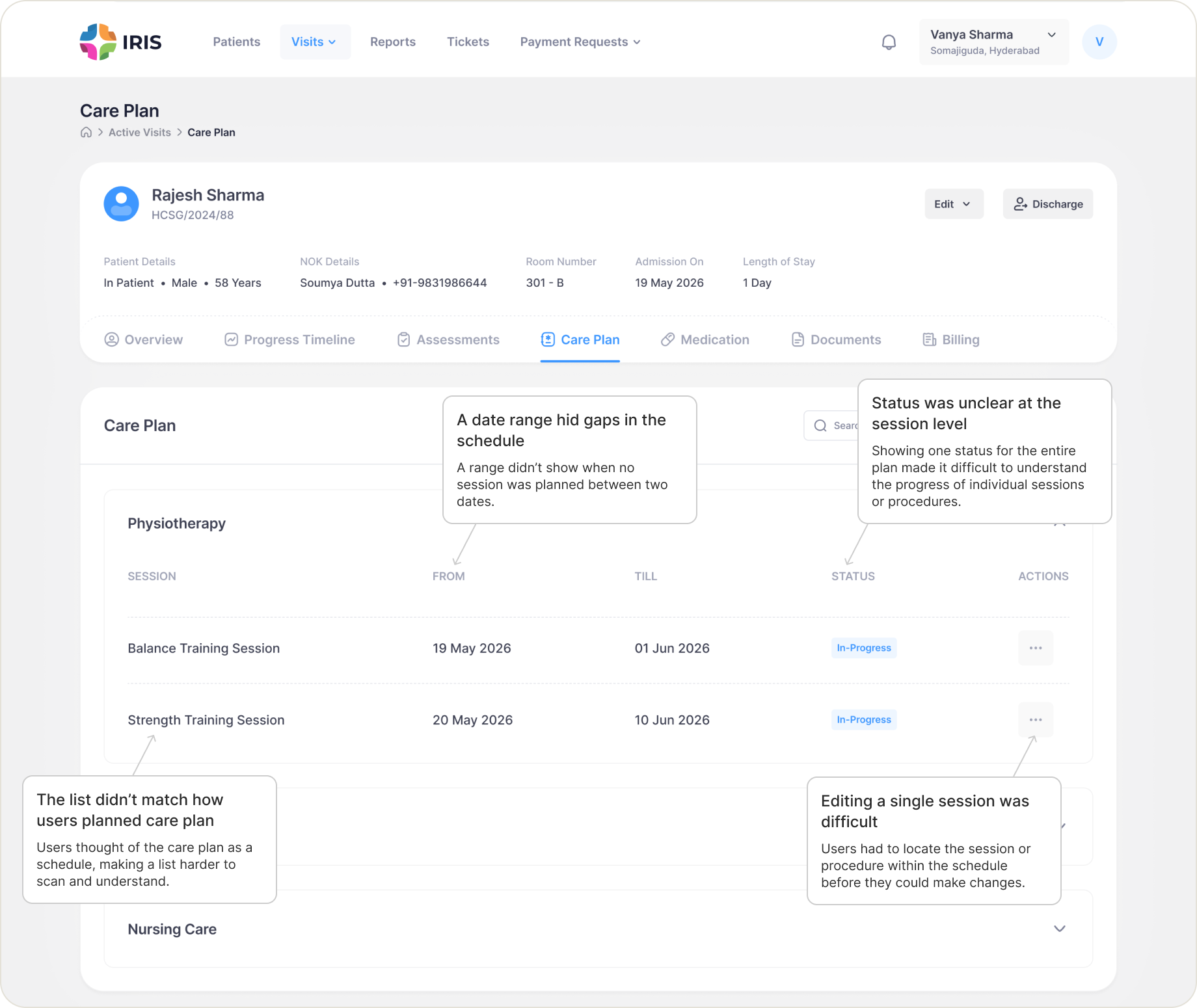
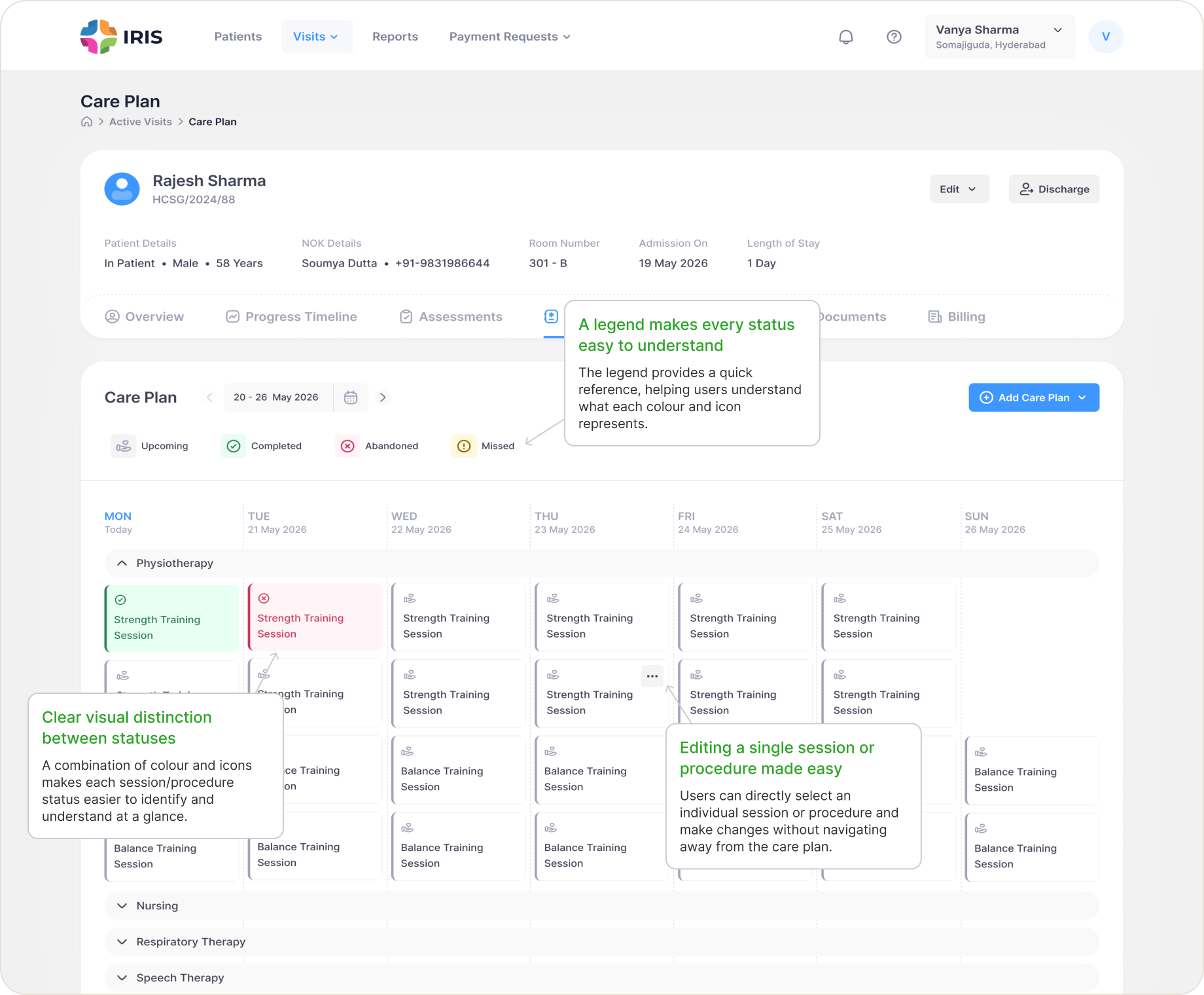
Care Plan V2
Care Plan Final Version
Therapy and nursing heads creates care plan on IRIS
Therapists and nurses marks care plan on the IRIS app
Billing staff adds or corrects the care plan bill item when required
Impact
With the care plan in one place and updates flowing automatically from the therapists who do the work, the manual handoffs that caused billing errors disappeared.
100% care plan adoptionAll care plans are now created and managed through IRIS
62%reduction in billing inaccuracies after launch
Eliminated daily manual updatesCare plans now update automatically when therapists complete a session/procedure
Learnings
Two things I took from building this: a single source of truth beat adding features, and designing per role made a dense tool feel simple.
1. One source of truth beats more features
The biggest wins came from getting everyone onto the same plan, not from adding capability on top of a fragmented process.
2. Design for the role, not the average user
Tailoring each view to what a role needs to do next made a dense tool feel simple for everyone who used it.